


 Tire Services
Brake Components Explained
How Your Brake System Works and Why Each Part Matters
Your brakes are the most important safety system on your vehicle. Yet for many drivers, brake problems are confusing because the braking system consists of multiple components that work together. When a component wears out or fails, it can affect braking performance, pedal feel, and overall control.
This page explains how brake systems work in clear, practical terms. It covers the main brake components, how they interact, and why proper brake maintenance is critical for safety and long-term reliability.
How Brake Systems Work
At a basic level, brakes convert motion into heat through friction. When you press the brake pedal, hydraulic pressure forces brake components to squeeze against the spinning wheels, slowing the vehicle.
Here’s the simplified process:
- You press the brake pedal
- Brake fluid transfers force through brake lines
- Calipers or wheel cylinders apply pressure
- Brake pads or shoes create friction
- Wheels slow, and the vehicle stops
While the concept is simple, modern brake systems rely on precise components and electronics to stop vehicles safely and consistently.
If any part of the system is worn, leaking, or sticking, braking performance can suffer.
Brake Pads vs Rotors vs Calipers
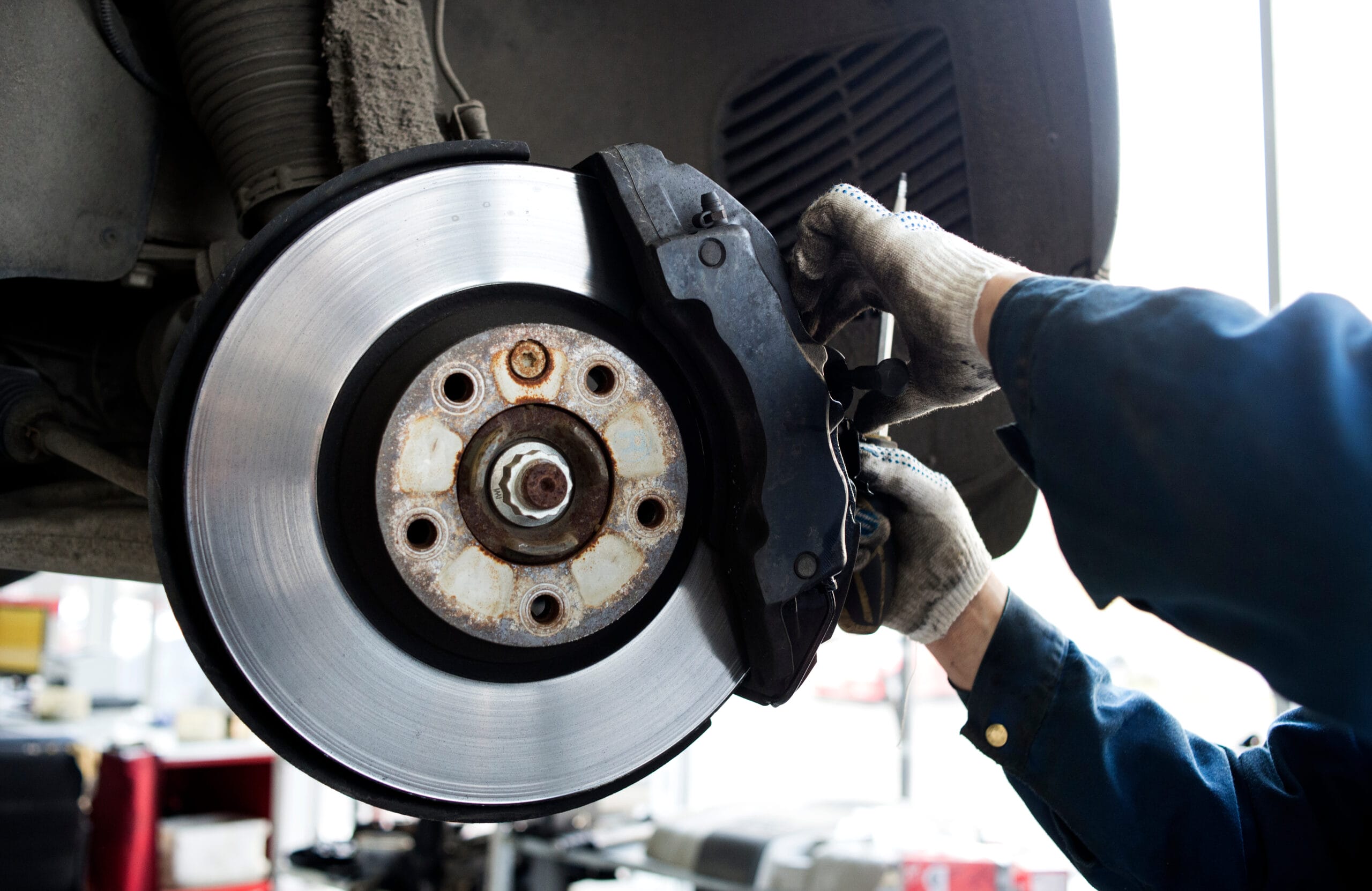
Disc brake systems are the most common setup on modern vehicles. They rely on three primary components working together.
Brake Pads
Brake pads are the friction material that presses against the rotors to slow the vehicle.
Key points:
- Pads wear down over time
- Softer pads are quieter but wear faster
- Harder pads last longer but may create more noise
When brake pads wear too thin, the stopping distance increases, and metal-to-metal contact can damage rotors.
Replacing worn pads early through brake pad replacement helps prevent more expensive repairs.
Brake Rotors
Brake rotors are metal discs attached to the wheels. When pads clamp down on them, friction slows the wheel.
Common rotor issues include:
- Warping from heat
- Grooves from worn pads
- Rust buildup
Warped or damaged rotors can cause vibration, pulsation, or shaking during braking.
In some cases, rotors may be resurfaced, but replacement via brake rotor service is oftenthe safest option.
Brake Calipers
Brake calipers house the pistons that push brake pads against the rotors.
Important functions:
- Convert hydraulic pressure into clamping force
- Release pressure when the pedal is released
- Keep pads aligned correctly
Calipers can fail by:
- Sticking due to corrosion
- Leaking brake fluid
- Uneven piston movement
A sticking caliper can cause uneven pad wear, pulling while braking, or overheating. In these cases, brake caliper repair or replacement may be required.
Disc Brakes vs Drum Brakes
Not all vehicles use disc brakes on every wheel. Some still use drum brakes, typically on the rear.
Disc Brakes
Disc brakes are found on:
- Front wheels of most vehicles
- All four wheels on many cars and SUVs
Advantages:
- Better heat dissipation
- More consistent stopping power
- Easier inspection and service
Disc brakes are especially effective during repeated or hard braking.
Drum Brakes
Drum brakes use a different design, where brake shoes press outward against a rotating drum.
Commonly found on:
- Rear wheels of older vehicles
- Some economy cars and trucks
Advantages:
- Lower cost
- Longer service intervals in light use
Disadvantages:
- Less effective at dissipating heat
- More complex to service
- Reduced performance under heavy braking
Drum brakes still work well when maintained, but they behave differently from disc brakes and require proper adjustment.
What Brake Fluid Does
Brake fluid is often overlooked, but it is essential to braking performance.
The Role of Brake Fluid
Brake fluid:
- Transfers force from the pedal to the brakes
- Operates under extreme pressure
- Resists heat and compression
Unlike air, brake fluid does not compress easily. That allows your pedal force to translate directly into braking force at the wheels.
Why Brake Fluid Needs Maintenance
Over time, brake fluid:
- Absorbs moisture from the air
- Loses heat resistance
- Can cause internal corrosion
Moisture-contaminated fluid can lead to:
- Spongy brake pedal
- Reduced braking efficiency
- Corrosion inside brake lines and calipers
This is why periodic brake fluid flush services are recommended, even if brakes feel normal.
ABS Explained: Anti-Lock Braking Systems
Most modern vehicles are equipped with ABS (anti-lock braking systems).
What ABS Does
ABS prevents wheels from locking up during hard braking by:
- Monitoring wheel speed
- Rapidly pulsing brake pressure
- Allowing the driver to maintain steering control
ABS does not shorten stopping distance in all conditions, but it improves stability and control, especially on wet or slippery roads.
ABS Components
ABS systems include:
- Wheel speed sensors
- ABS control module
- Hydraulic control unit
When a fault occurs, the ABS warning light may turn on. While normal braking usually still works, ABS may be disabled until it is repaired.
An illuminated warning light should be inspected through brake system diagnostics.
Common Brake Problems and What They Mean
Brake systems often give warning signs before failure.
Squealing or Grinding Noises
- Squealing often means pads are wearing thin
- Grinding usually means pads are worn out completely
Vibration or Pulsation While Braking
- Warped rotors
- Uneven pad deposits
Brake Pedal Feels Soft or Spongy
- Air or moisture in brake fluid
- Brake fluid leak
Vehicle Pulls While Braking
- Sticking caliper
- Uneven pad wear
Addressing these symptoms early can prevent more extensive damage.
How Brake Components Wear Together
Brake components do not wear independently. When one part fails, it often affects others.
Examples:
- Worn pads damage rotors
- Sticking calipers overheat pads and rotors
- Old fluid accelerates internal corrosion
This is why brake inspections often look at the entire system, not just one component.
A full brake inspection service ensures all parts are evaluated together.
Why Front Brakes Wear Faster Than Rear Brakes
Most vehicles rely more heavily on front brakes.
Reasons include:
- Weight transfer during braking
- Greater stopping force at the front
- Larger rotor and pad sizes
Front brakes typically wear out faster and are serviced more frequently than rear brakes.
How Long Brake Components Typically Last
Lifespan varies depending on driving habits and conditions.
General estimates:
- Brake pads: 30,000 to 70,000 miles
- Brake rotors: 50,000 to 100,000 miles
- Brake fluid: every 2 to 3 years
City driving, towing, and aggressive braking shorten component life.
Why Professional Brake Service Matters
Brake systems involve safety-critical components and hydraulic pressure. Improper installation or skipped steps can result in reduced braking performance or failure.
Professional brake service includes:
- Correct torque specifications
- Proper lubrication points
- System bleeding and testing
- Road testing after service
This ensures the system performs as designed in real-world conditions.
How Brake Maintenance Protects Long-Term Costs
Ignoring brake issues often leads to:
- Higher repair costs
- Reduced safety
- Damage to multiple components
Routine inspections and timely service can:
- Extend component life
- Improve stopping performance
- Prevent unexpected failures
This is why brake maintenance is often paired with tire and alignment services, since all three systems affect safety and handling.
Brake systems rely on multiple components working together, including pads, rotors, calipers, fluid, and ABS technology. Each part plays a critical role in stopping your vehicle safely and predictably.
Understanding how brakes work helps you recognize warning signs early and make informed maintenance decisions. Whether it’s worn pads, old brake fluid, or ABS issues, addressing problems promptly improves safety and prevents costly repairs.
If your brakes are making noise, vibrating, or just don’t feel right, scheduling a brake system inspection is the best way to protect your vehicle and your peace of mind.